




As businesses become increasingly aware of their environmental responsibilities, sustainability has become an important focus across many industries. The printing sector is no exception. Offices, schools, and commercial print environments rely heavily on toner cartridges, ink cartridges, and other consumables, which can generate a significant amount of waste if not managed properly.
For distributors, service providers, and businesses that use large volumes of printing supplies, understanding recycling and sustainability in printing consumables is essential. Adopting environmentally responsible practices not only helps protect natural resources but also improves corporate sustainability initiatives and brand reputation.
In this article, we explore the environmental challenges associated with printing consumables, the importance of recycling programs, and how manufacturers such as TOC are contributing to more sustainable printing solutions.
The Environmental Impact of Printing Consumables
Printer consumables are designed to deliver reliable performance during printing, but once they are empty or worn out, they often become waste. Millions of toner cartridges and ink cartridges are used worldwide every year, and many of them end up in landfills if not recycled properly.
Several factors contribute to the environmental impact of printing consumables.
Plastic Waste
Most toner and ink cartridges are made from high-strength plastic components. These materials are durable and necessary for protecting the internal mechanisms of the cartridge, but they can take many years to decompose in landfills.
Toner Residue
Used cartridges often contain residual toner powder. If disposed of improperly, this toner may contribute to environmental contamination.
Manufacturing Resources
Producing new cartridges requires raw materials, energy, and manufacturing processes that consume natural resources.
Because of these factors, recycling and reusing cartridge components can significantly reduce the environmental footprint of printing activities.
Why Recycling Printing Consumables Matters
Recycling printing consumables is one of the most effective ways to reduce environmental impact in the printing industry.
By recycling toner and ink cartridges, companies can help conserve resources, reduce waste, and support circular economy practices.
Key benefits of recycling include:
- Reducing landfill waste
- Conserving raw materials
- Lowering energy consumption
- Reducing carbon emissions
- Supporting sustainable manufacturing
Many businesses now integrate recycling programs into their corporate sustainability policies as part of broader environmental initiatives.
How Toner Cartridge Recycling Works
The toner cartridge recycling process typically involves several stages designed to recover reusable materials and safely dispose of waste components.
Collection
Used cartridges are collected through recycling programs offered by manufacturers, distributors, or office supply companies. Some businesses also establish internal collection systems for employees.
Sorting and Inspection
Collected cartridges are sorted by type and condition. Cartridges that can be refurbished or remanufactured are separated from those that must be dismantled for material recycling.
Component Recovery
During recycling, cartridges are disassembled to recover materials such as:
- Plastic housings
- Metal components
- Rubber seals
- Electronic chips
These materials can be reused in new products or recycled into other industrial applications.
Responsible Disposal
Residual toner and other non-recyclable materials are disposed of using environmentally responsible methods to prevent pollution.
Remanufacturing vs Recycling
Two important sustainability approaches in the printing industry are remanufacturing and recycling.
Remanufacturing
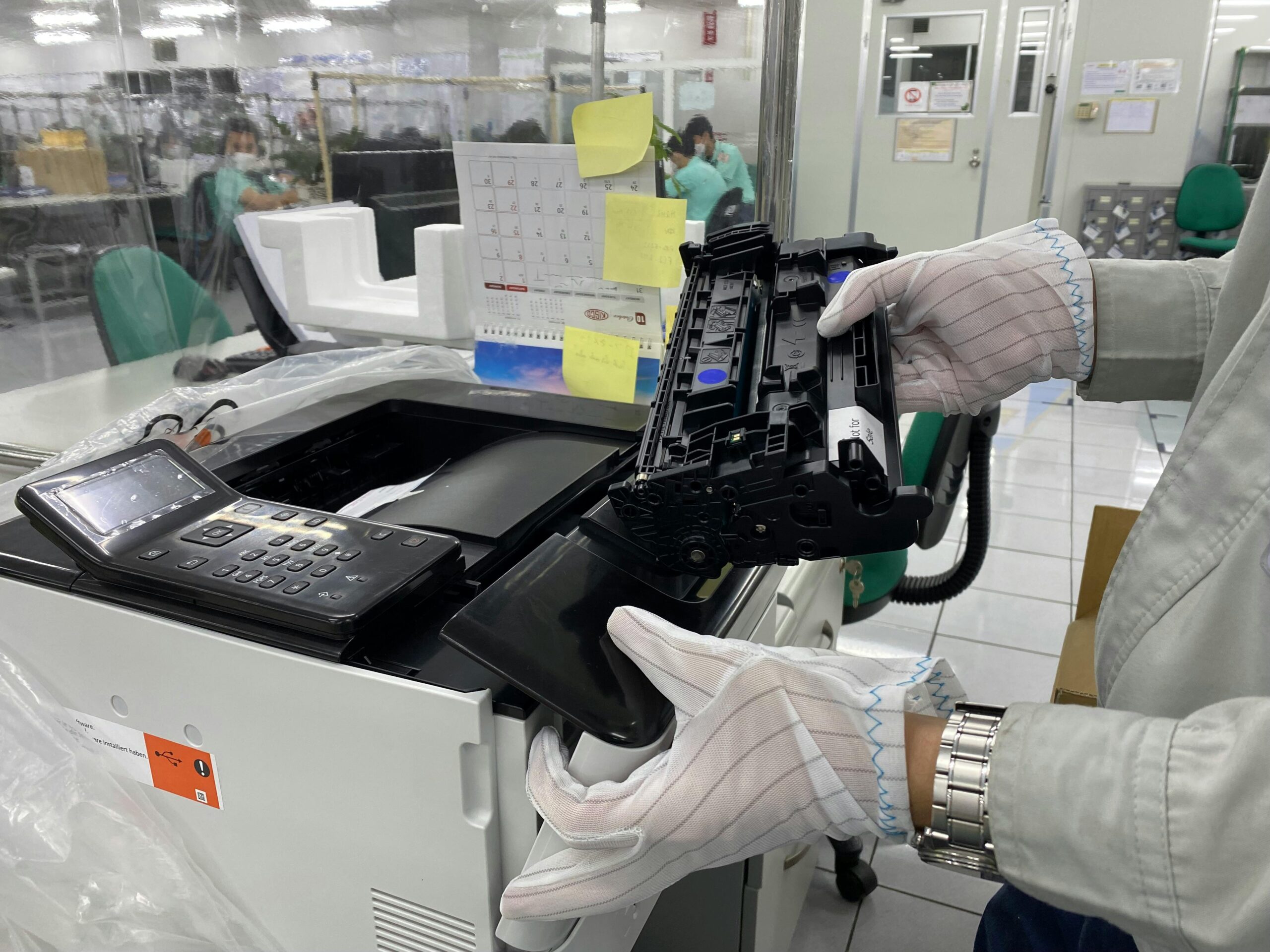
Remanufacturing involves restoring used cartridges so they can be reused again. The process typically includes cleaning the cartridge, replacing worn components, refilling toner, and testing the cartridge for quality assurance.
Remanufacturing extends the life cycle of cartridges and significantly reduces waste.
Recycling
Recycling focuses on breaking down cartridges into raw materials that can be reused in manufacturing other products.
Both approaches contribute to environmental sustainability and help reduce the environmental footprint of printing consumables.
The Role of Compatible Cartridges in Sustainability
Compatible toner and ink cartridges can also support sustainability initiatives when produced responsibly.
High-quality compatible cartridges are often designed with efficient material usage and optimized production processes. Some manufacturers also incorporate recycled materials into their products.
Compatible cartridges provide several sustainability benefits:
- Lower material waste through optimized designs
- Reduced packaging materials
- Extended cartridge lifespan
- Lower energy consumption during manufacturing
Manufacturers such as TOC focus on producing compatible printer consumables that balance performance, cost efficiency, and environmental responsibility.
Sustainable Packaging for Printing Supplies
Packaging is another important environmental consideration in the printing consumables industry. Traditional packaging materials can generate additional waste if they are not recyclable.
Modern sustainable packaging solutions include:
- Recyclable cardboard packaging
- Reduced plastic usage
- Biodegradable packing materials
- Compact packaging designs that reduce shipping volume
These improvements help reduce the environmental impact of logistics and distribution.
Many manufacturers are now redesigning their packaging to meet international environmental standards.
Reducing Printing Waste in Offices
In addition to recycling consumables, organizations can reduce environmental impact by improving printing practices.
Several simple strategies can help reduce printing waste.
Duplex Printing
Printing on both sides of the paper reduces paper consumption by up to 50 percent.
Digital Document Management
Encouraging digital document sharing and storage reduces unnecessary printing.
Efficient Printer Settings
Using draft mode or grayscale printing for internal documents can reduce toner consumption.
Print Monitoring
Monitoring printing usage helps organizations identify areas where printing can be reduced.
Together, these practices support both environmental sustainability and cost savings.
Sustainability Benefits for Businesses and Distributors
Adopting environmentally responsible printing practices offers several advantages for businesses and distributors.
Improved Corporate Responsibility
Companies that prioritize sustainability demonstrate environmental responsibility, which strengthens their brand image.
Compliance with Environmental Regulations
Many regions are implementing stricter environmental regulations related to electronic waste and consumable disposal. Recycling programs help companies stay compliant.
Cost Savings
Recycling and efficient printing practices can reduce material costs and waste management expenses.
Customer Preference for Sustainable Products
Many customers now prefer suppliers that offer environmentally friendly products and sustainable practices.
Brands that prioritize sustainability are better positioned to meet these growing expectations.
How Manufacturers Support Sustainable Printing
Responsible manufacturers are investing in research and development to improve the environmental performance of printing consumables.
Key initiatives include:
- Developing longer-lasting cartridges
- Using recyclable materials in cartridge construction
- Improving energy efficiency in production processes
- Reducing packaging waste
- Supporting cartridge recycling programs
TOC printing consumables are designed with durability and reliability in mind, helping businesses reduce unnecessary waste while maintaining consistent printing performance.
The Future of Sustainable Printing
As sustainability becomes a global priority, the printing industry continues to evolve toward more environmentally friendly solutions.
Future developments may include:
- Fully recyclable cartridge designs
- Biodegradable materials for cartridge components
- Improved remanufacturing technologies
- Smart printers that optimize consumable usage
- Expanded global recycling programs
These innovations will help reduce the environmental footprint of printing while maintaining the reliability businesses depend on.
Conclusion
Recycling and sustainability are becoming essential considerations in the printing consumables industry. With millions of toner and ink cartridges used worldwide each year, responsible waste management and recycling programs play a crucial role in reducing environmental impact.
By adopting recycling initiatives, improving printing efficiency, and choosing environmentally responsible products, businesses can significantly reduce waste and conserve valuable resources.
Manufacturers such as TOC contribute to these efforts by producing reliable compatible consumables designed for efficiency, durability, and responsible material usage.
As the printing industry continues to evolve, sustainable practices will play an increasingly important role in balancing operational needs with environmental responsibility. Through recycling, responsible manufacturing, and smarter printing strategies, businesses can move toward a more sustainable future while maintaining high-quality printing performance.